
Winter at the Grand Canyon
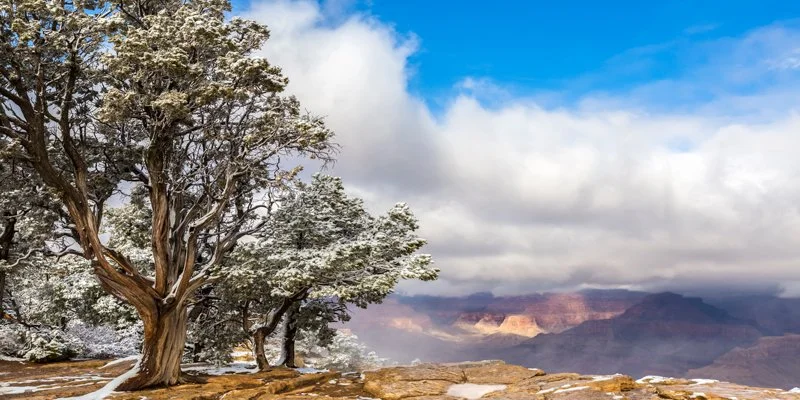
A Complete Guide to Experiencing Majesty, Solitude, and Safety in the Cold Season
Traveling to the Grand Canyon in winter offers an experience that is as profound as it is unexpected. While most visitors arrive during the warmer months, the cold season reveals an entirely different character. The vast cliffs become softened by quiet snow. The air grows still and sharply clear. Light moves across the canyon walls with a slow grandeur that feels contemplative. Winter rewards every traveler willing to embrace its calm presence.
For many, the first thought of a winter visit to the canyon is uncertainty. Concerns about temperature, access, and safety often arise. Yet with proper preparation and realistic expectations, a winter journey becomes deeply rewarding. The season gifts dramatic contrast and astonishing clarity. It brings far fewer crowds and offers moments many visitors never experience. This guide explores the practical details and the emotional richness of visiting the Grand Canyon during the winter months, helping you prepare for a journey shaped by serenity, introspection, and natural spectacle.
A Season of Majestic Contrast
The Grand Canyon is known for its vast scale and layered geology, but winter transforms the familiar scene into something dreamlike. Snow highlights the upper ridges in delicate lines. Shadows stretch farther. Colors become vivid when warmed by low angled sunlight. The canyon that millions photograph in summer feels entirely new in winter, with a beauty that is quiet, subtle, and deeply moving.
The cold season also invites travelers to engage more closely with their surroundings. The absence of large crowds allows a more intimate experience. You can hear your footsteps on the snow. You can sense the hush that settles over the rim and the inner gorge. Wildlife behaves differently as well. Mule deer walk more confidently near scenic overlooks. Ravens cut slow circles overhead. Elk graze near the forests of the South Rim with a calm rhythm.
At the same time, winter’s severity adds a layer of respect to every moment. This environment demands attention and mindfulness. Conditions change rapidly. Trails that feel casual in summer become serious winter routes. The reward is an atmosphere of authentic discovery, where each viewpoint reveals something rare.
Choosing the Right Rim for a Winter Visit
The two primary areas of the park, the South Rim and the North Rim, offer very different opportunities during winter. Understanding their accessibility and climate is essential for planning.
The South Rim
This is the most accessible area during winter. Roads remain open throughout the year except during temporary closures from snowstorms. Services such as lodging, restaurants, and visitor centers operate with normal winter schedules. Shuttle routes modify their operation but still offer access to key viewpoints. Most travelers choose the South Rim for winter visits because it provides both beauty and reliability.
From the South Rim, you gain access to a broad range of viewpoints that look down into the canyon with sweeping perspective. The wide open sight lines allow sunlight to illuminate the cliffs in slow transitions. Sunrise and sunset become especially vibrant during winter, with crisp air enhancing color and clarity.
The North Rim
The North Rim closes for most of the winter season. Its higher elevation receives heavy snow, and the access roads become impassable. Only experienced winter travelers using specialized gear and traveling outside the developed park area consider remote approaches. For the general visitor, the North Rim becomes available again when spring returns.
For this reason, this guide focuses primarily on winter travel at the South Rim.
Planning Your Winter Trip
Sound preparation shapes the quality of your experience. Winter at the canyon is magnificent, but it can be harsh. Thoughtful planning ensures that the beauty of the season remains comfortable and enjoyable.
Weather Expectations
The South Rim sits at an elevation of around seven thousand feet. Winter conditions can shift quickly from calm and sunny to windy and snowy. Daytime temperatures often rise above freezing when the sun shines but drop quickly once shadows fall. Nights can be extremely cold.
Clear days offer exceptional visibility. Snowstorms create fog like conditions that obscure the canyon for hours or even an entire day. Travelers should expect both possibilities and see them as part of the winter character.
Clothing and Personal Gear
Warmth and layering are essential. The air is thin and cold, so proper insulation becomes important. Here are recommended considerations:
A base layer with moisture managing fabric
A mid layer for warmth such as fleece or a thick insulating garment
A wind resistant outer layer
Warm gloves
A hat that covers ears
Wool or synthetic socks
Waterproof boots with reliable traction
Sunglasses for glare on snow
Sunscreen even on overcast days because canyon reflections intensify exposure
Comfortable clothing allows you to stay outdoors longer and enjoy photography, exploration, and scenic stops without discomfort.
Driving Conditions
The main roads of the South Rim are maintained throughout the winter, but closures occur during storms. Ice patches remain after snow clears. Travelers should:
Keep a full tank of fuel
Carry blankets in the vehicle
Allow extra travel time
Drive slowly around curves and shaded stretches
Most rental vehicles come equipped with appropriate tires, but it is wise to confirm before your arrival.
Lodging
Winter offers higher availability and more affordable rates. Staying inside the park provides the greatest convenience because you can reach viewpoints quickly and avoid early morning driving in darkness. Lodges within the park fill less quickly in winter, yet it is still wise to reserve in advance.
Lodging outside the park in Tusayan is another reliable option. Hotels there remain open year round, and the short drive to the park entrance is manageable as long as roads are clear.
Experiencing the Scenic Overlooks
Scenic overlooks are the heart of a winter visit. The combination of low angled sunlight and snow creates scenes that feel luminous and sculpted. The following viewpoints offer especially compelling experiences during the winter months.
Mather Point
Located near the visitor center, this viewpoint is often the introduction to the canyon for many travelers. It provides wide vistas and dramatic depth. In winter, snow gathers along the railings and stones which creates an elegant foreground for photography. Sunrise transforms this area into a stage of glowing gold and pink light.
Yavapai Point
This point offers an exceptional look into the canyon’s geologic layers. The clarity of winter air enhances the visibility of distant cliffs. The natural quiet of the season makes it easier to absorb the scale of the landscape.
Hopi Point
A sunset favorite even in summer, Hopi Point becomes profoundly beautiful during winter evenings. The western horizon glows with gentle color. Snow on the rim amplifies contrast. Shadows stretch like a veil across the canyon floor.
Desert View
Desert View provides a long distance perspective with remarkable sky visibility. The Desert View Watchtower stands in quiet contrast to the surrounding white slopes. On clear winter days, the horizon appears incredibly sharp.
Grandview Point
Though the road may close during heavy snow, this viewpoint offers one of the most dramatic perspectives on the canyon. Winter sunlight highlights ridges and cliffs with sculptural clarity.
Hiking in Winter
Hiking during winter can be extraordinary, but it requires caution. Trails can be icy, especially during early morning and late afternoon. Conditions vary significantly depending on sunlight, shade, and recent weather. For those who prefer careful exploration, short walks along the rim provide safe enjoyment. For more ambitious visitors, descending into the canyon during the cold season offers solitude unlike any other time of year.
Rim Trail
The Rim Trail is ideal for winter travelers. Most sections are level and accessible. This route allows you to walk between several scenic overlooks while enjoying the quiet beauty of the season. Snow often covers parts of the trail, but maintenance keeps it relatively clear. It is particularly lovely during sunrise or late morning when sunlight creates warm color across the canyon walls.
Bright Angel Trail
This trail experiences significant ice near the top during winter. Most hikers use traction devices designed for icy surfaces. With proper gear and caution, you can descend short distances to gain a different perspective. Even walking a short section provides a quiet atmosphere and a more immersive sense of depth. Travelers should turn around whenever the conditions feel too demanding.
South Kaibab Trail
Known for its dramatic ridge line descent, this trail can be extremely icy and exposed during winter. Only well prepared hikers should attempt it, and caution is essential. The rewards include remarkable viewpoints such as Ooh Aah Point which feels even more inspiring under winter light.
Safety Considerations
Winter hiking demands a respect for the environment. Travelers should:
Carry water even in cold weather
Wear traction devices when ice is present
Remain aware of time because temperatures drop quickly
Inform someone of their hiking plan
Avoid descending more than they can safely ascend in winter conditions
If you prefer a more secure experience, ranger programs sometimes include guided walks that highlight geology, ecology, and seasonal details.
Photography in Winter
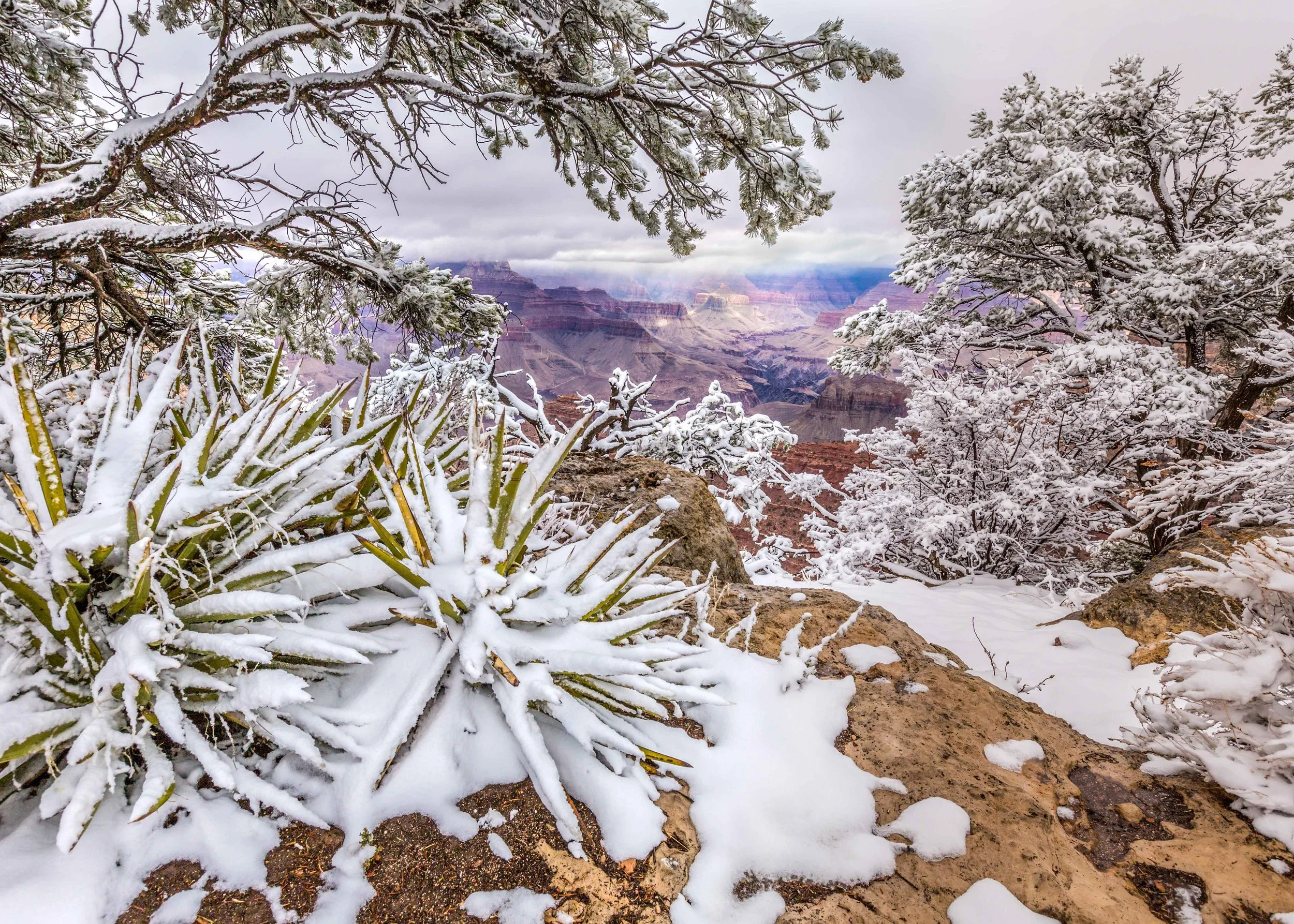
Winter creates exceptional opportunities for artists and photographers. The cold air increases clarity, and snow introduces contrast that defines shapes with precision. For many photographers, winter at the canyon becomes one of the most inspiring times of year.
Light and Atmosphere
The low winter sun produces long shadows that emphasize form. Morning and evening light can be intensely warm, creating a dramatic interplay between golden hues and cool blue snow. Midday light, often harsh in summer, becomes softer due to winter haze and atmospheric scattering.
Snow on the rim adds delicate texture. Frost can form on trees near viewpoints. Fog occasionally rises from the inner canyon after storms, creating ethereal scenes where cliffs appear and disappear in shifting layers.
Composition Tips
Consider the following suggestions:
Use foreground elements such as snow covered stones or branches to frame the canyon
Capture the contrast between warm light on cliffs and cool snow in the foreground
Seek patterns in ridges where winter light creates alternating bands of shadow and illumination
Embrace minimalist scenes when fog obscures the canyon
Experiment with long exposures during twilight to capture subtle color transitions
Patience is essential. Winter weather changes rapidly, and remarkable light often arrives without warning.
Wildlife Encounters
Winter affects wildlife behavior in ways that can enrich your visit. Many animals remain active throughout the season. Mule deer often appear near the visitor center. Elk may wander through forested areas along the rim. Ravens perform slow aerial displays above cliffs. Tracks of small animals become visible in snow.
For your safety and the well being of the animals, maintain respectful distance. Wildlife photography becomes especially rewarding in winter because you can capture animals within snowy landscapes that reflect natural calm.
Dining and Warm Indoor Experiences
After spending time in cold air, warm indoor spaces become comforting. The South Rim offers several dining options that remain open throughout the winter season. Many restaurants provide views of the canyon, and the quiet atmosphere enhances the experience.
Visitor centers and museums also offer shelter and education. The geology museum at Yavapai Point gives insight into the canyon’s formation. Winter is an ideal time for this because you can learn without crowds and return to the rim with a deeper sense of appreciation.
The Emotional Experience of a Winter Visit
While a winter trip requires preparation, its emotional effect is worth the effort. The season invites introspection. The quiet gives you space to reflect and reconnect with the natural world. The canyon’s vastness feels more personal. Travelers often describe winter visits as spiritual or renewing.
The rhythm of the season encourages a slower pace. Instead of rushing from viewpoint to viewpoint, you find yourself pausing longer. You watch clouds drift across the canyon. You listen to the sound of wind moving through pines. You sense the ancient presence of stone shaped by millions of years.
These moments become some of the most meaningful. The cold season removes distractions and invites a deeper connection.
Suggested One Day Winter Itinerary
For travelers with limited time, the following itinerary provides a balanced experience.
Morning
Begin at Mather Point for sunrise. The early light often fills the canyon with gentle color. Afterward, walk sections of the Rim Trail toward Yavapai Point. Explore the geology museum and enjoy the quiet morning atmosphere.
Midday
Visit Yavapai Lodge or another dining location for a warm meal. Spend time in indoor exhibits or read interpretive signs along the rim. This break allows you to warm up before exploring further.
Afternoon
Drive or take a shuttle to Hopi Point. Spend time photographing the subtle changes in light. Continue to Desert View if conditions and time allow. The long horizon is particularly striking in winter.
Evening
Return to Hopi Point or another west facing viewpoint for sunset. The cold air enhances color depth. Pack warm clothing to remain comfortable as temperatures drop.
Suggested Extended Winter Visit
If you have several days, you can deepen your experience.
Day one focuses on scenic overlooks and easy walks
Day two includes a cautious winter hike such as a section of Bright Angel Trail
Day three offers opportunities for sunrise photography followed by quiet exploration of forested areas near the rim
Longer stays also increase your chance of witnessing different weather moods such as snowstorms, clear mornings, or fog filled canyons.
Respecting the Landscape
Winter highlights the fragility of high desert environments. Stay on designated trails. Avoid stepping on snow covered vegetation. Use trash receptacles or pack out anything you bring. Respect the silence of the season and the safety of others.
Final Reflections
A winter journey to the Grand Canyon is more than a scenic trip. It is an encounter with stillness, space, and light. The contrast between snow and stone creates a visual poetry that stays with you long after your visit. The absence of large crowds encourages contemplation. The cold season reveals a profound beauty that many travelers never witness.
For those willing to embrace winter’s challenges with preparedness and respect, the reward is extraordinary. You experience a canyon that is timeless, quiet, and radiant. You become part of a small circle of travelers who understand how deeply moving the Grand Canyon can be when wrapped in winter’s embrace.
